Installed work
Lawn Services
Natural hardscapes, mulching and tree installation. The work that changes the shape of a property rather than maintaining it, done by the same crew that mows it afterward.
Chapter 01
Bed edging and mulch depth: the line between a clean edge and a smothered root flare
Mulch does two jobs at once, holding moisture in the bed and keeping weeds from taking hold, and both of those depend on how deep it sits. Too thin and it stops doing either job by midsummer. Too thick, especially piled up against a trunk the way it so often gets dumped, and it holds moisture against bark that is supposed to stay dry, inviting rot and disease right where a tree or shrub can least afford it.
The edge matters as much as the depth. A clean, cut edge between bed and lawn is what actually reads as maintained from the street, and it is the difference between a bed that looks intentional and one that looks like mulch was simply thrown at a rough circle around a tree.
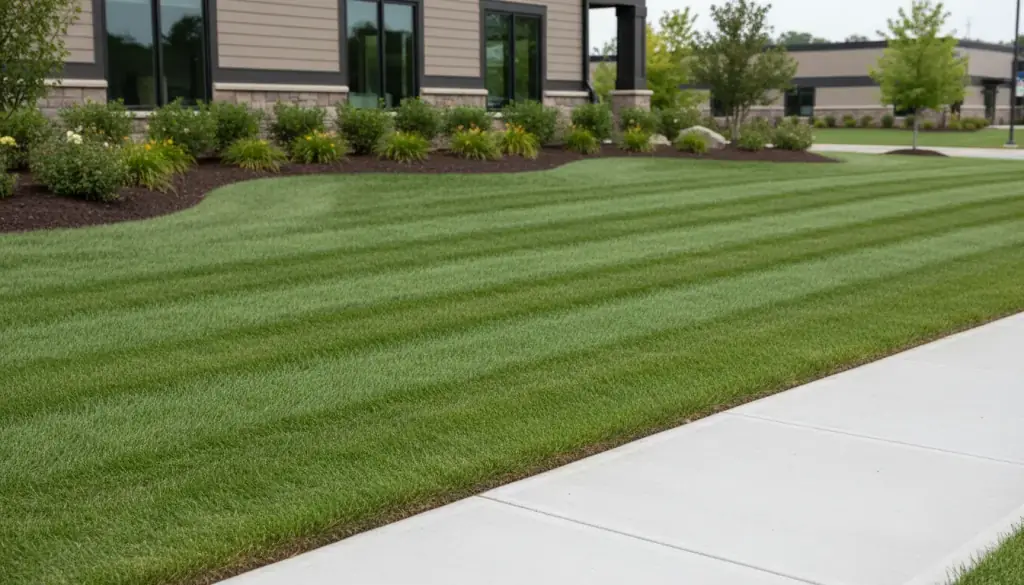
A freshly mown striped lawn with a crisply edged walkway and a mulched planting bed against a building
Setting natural stone on a grade that already drains
A walkway or a stone feature is only as good as the ground underneath it, and the grade has to be right before the first stone goes down. Set stone on a low spot that collects water, or on a grade that pitches the wrong way, and the problem does not go away, it just waits. Water finds the low point every time, and a hardscape that fights the water instead of working with it starts heaving, settling unevenly, or pooling within a season or two.
The right approach reads the property's own drainage first, where water already wants to go, and sets the stone to work with that rather than against it. That is slower up front than just leveling a patch and laying stone on it, but it is the difference between a walkway that holds for years and one that needs redoing.
Chapter 03
Planting a tree that survives its second winter
Most newly planted trees that fail do not die in year one. They struggle through a second winter with roots that never established properly, and by then the cause is usually traceable back to how the hole was dug. A hole wide enough, two to three times the width of the root ball, gives roots loose ground to spread into rather than the compacted walls of a narrow hole they can never push through.
The root flare, where the trunk widens out into the roots, needs to sit at or just above grade, not buried under extra soil piled on to make the planting look neat. Staking, when it is needed at all, should be loose enough to let the trunk move and build its own strength, and it should come off after the first year rather than staying on indefinitely. Watering through that first summer matters more than anything done at planting time, since a tree with an unestablished root system cannot yet reach water on its own.
Canon's — Fully insured, running newer equipment. Call (440) 759-8409.
What we work with
The materials behind installed work
Installed work is judged years later, not on the day it goes in. These are the materials and the handling that decide which way that goes.
- Mulch
- Hardwood mulch set to a depth that holds moisture and blocks weeds without piling against bark. Edges get cut clean, not just covered.
- Natural stone
- Stone for walkways, borders and hardscape features, set on ground that already drains rather than a base built to fight water uphill.
- Trees and root stock
- Planted with the root flare set at grade, the hole wide enough for the roots to spread, and staking loose enough to let the trunk build its own strength.
- Soil and material handling
- Topsoil, fill and mulch moved to the back of a property with a skid steer rather than a wheelbarrow, without tearing up the lawn getting there.