Why We Time Fall Cleanup to the Trees, Not the Calendar
Maples and oaks don't read a calendar, and neither should a fall cleanup.
September 15, 2026 · 3 min read
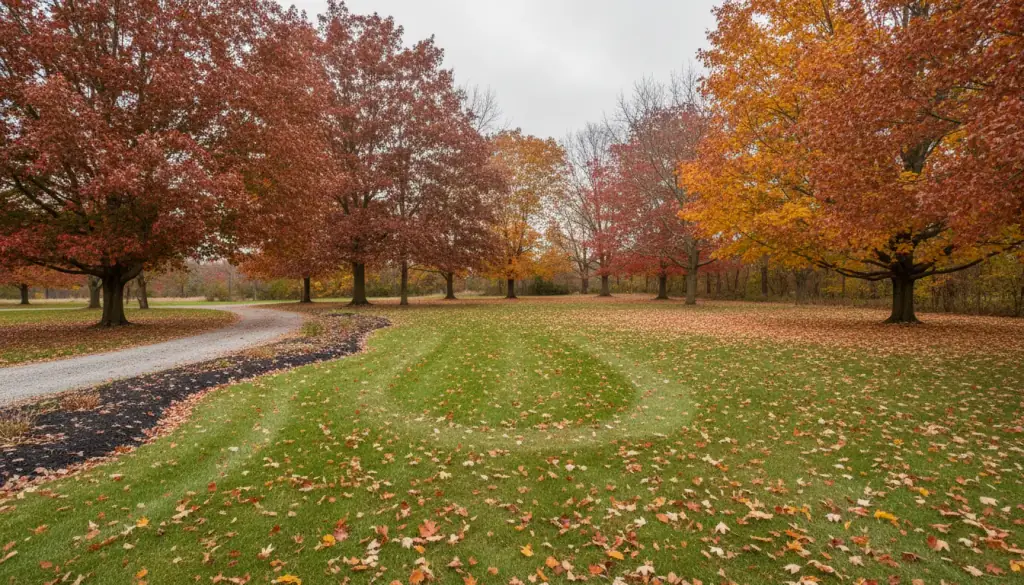
Ask five homeowners in Wellington when they want fall cleanup done and most of them will give you a date. The trees in their own yard don't work that way. Maples let go in a rush over a week or two. Oaks hang on for weeks longer, sometimes into November, and a single cleanup booked for the last weekend in October can leave a lawn buried again before Thanksgiving.
Why a Fixed Date Never Quite Works
A calendar date is easy to sell and easy to schedule around, which is probably why it's the default most places default to. Weather doesn't cooperate with a fixed date, though. A wet fall pushes leaf drop later than usual. An early cold snap can strip a stand of maples in days instead of the usual couple of weeks. Booking a single visit for, say, the last Saturday in October is really a bet that this particular year behaves like an average one, and plenty of years around here don't.
Two Trees, Two Timelines
Around Lorain County the split is usually maple against oak. Maples color fast and drop fast, often within a single windy week in mid to late October. Oaks are slower to turn and slower to let go, and a mature oak can still be holding a third of its leaves well after the first frost. A property with both on it, which is most of them, doesn't really have one leaf season. It has two.
What a Layer of Wet Leaves Actually Does to a Lawn
A thin scatter of leaves left over winter isn't a crisis. A thick, wet mat is a different problem. Leaves that get rained on and then frozen compress into a layer that blocks light and air from the grass underneath. Come spring, the patches under that mat are often thin, pale, or slow to green up compared to the rest of the lawn, and the same wet mat is exactly the kind of cover fungal disease likes over winter.
Why One Pass in October Isn't Enough Here
- A cleanup before the oaks drop means a second full leaf layer arrives a few weeks later with nobody scheduled to deal with it.
- Leaves that sit under the season's first snow don't blow away in spring, they get matted into the turf instead.
- Beds cleared too early just refill, so mulch and edging work done too soon has to be redone.
Raking Is The Smallest Part Of It
A real fall cleanup covers more ground than the leaves alone. Perennials that have finished for the year get cut back so they're not going into winter as a pile of collapsed, wet stems. Beds get a last pass to pull the season's weeds before they can drop seed for next spring. The last mow of the year usually comes in a little lower than the summer height, since short grass going into winter is less likely to mat down under snow than tall grass would be. All of it works together, and skipping any one piece to save time on the leaves undercuts the rest.
What Happens If Cleanup Gets Skipped Entirely
Leaves left on a lawn all winter, under snow, are where snow mold gets its start. It's a fungal disease that shows up as circular gray or pink patches in the grass right as the snow melts in early spring, and matted, wet leaf cover is exactly the kind of damp, dark environment it needs. A lawn that goes into winter clean and at a reasonable height is a lot less likely to greet April with those patches than one still carrying a season's worth of leaves.
How We Actually Time It
Because we're on the same properties every week through the season, we can watch what's actually happening in a specific yard rather than working off a countywide guess. That's the advantage of a crew that already knows the trees on a property, not just the address. Cleanup gets timed to when the leaves are actually down, oaks included, not to whichever weekend happens to have the best weather forecast.
If a cleanup already happened this year and the oaks are still dropping, that's not unusual and it's not a wasted first visit. It just means the job isn't finished yet. The last leaves before the ground freezes matter more for how a lawn looks in April than the first ones did in October.
Canon's Lawn Service, (440) 759-8409
Call (440) 759-8409More articles
Why Cutting Your Lawn Shorter in August Makes It Worse
The shorter cut that looks tidiest in July is usually the reason the same lawn goes brown by August.
The Mulch Mistake That Slowly Kills Young Trees and Shrubs
The mulch pile that looks tidiest against a trunk is usually the one doing the most damage underneath.