What Your Deicer Is Actually Doing to Your Driveway, Your Lawn and Your Dog's Paws
The bag of ice melt that clears a driveway fastest is usually the one doing the most damage to what's underneath it.
September 15, 2026 · 3 min read
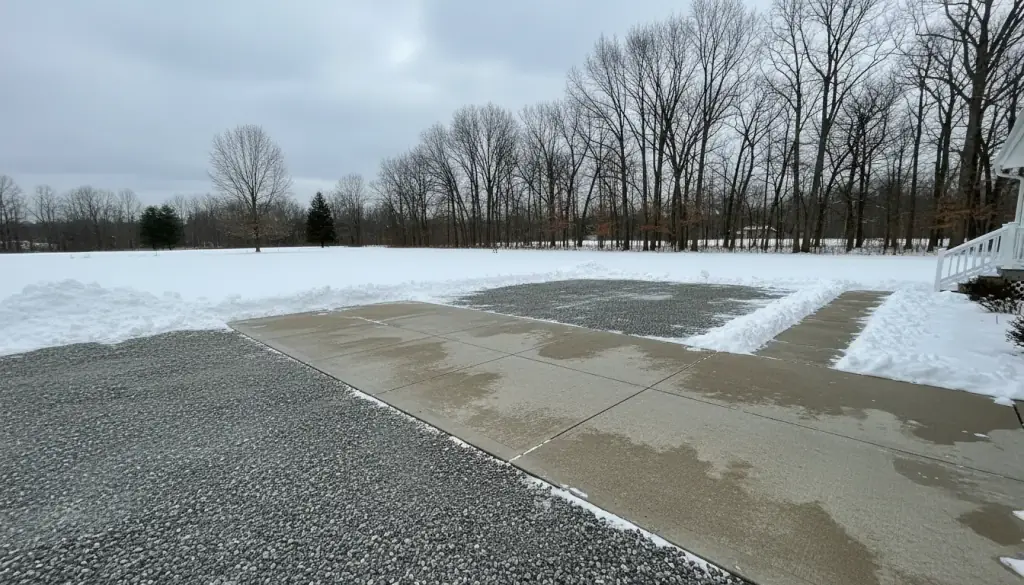
Ice melt gets bought the way most people buy salt: whatever bag is cheapest and closest to the door on the way out to shovel. That's fine for one storm. Used all winter, every winter, it's worth knowing what's actually in the bag, because deicers aren't interchangeable and the differences show up in places other than the driveway.
Reading the Bag Before You Buy It
The active ingredient is usually printed in small type on the bag, and it's worth a look before checking out. Sodium chloride is plain rock salt. Calcium chloride and magnesium chloride are the gentler, faster acting chlorides. Some bags blend two or three together to balance cost against performance. A bag that just says ice melter without naming what's in it is worth skipping, since that's usually the least specific, least predictable option on the shelf rather than a premium one.
Rock Salt Is Cheap Because It's Doing Less Work
Plain rock salt, sodium chloride, is the cheapest option for a reason. It works fine down to a certain temperature and then mostly stops working, which is why it's less effective on the coldest nights of an Ohio winter, exactly when you need it most. It's also the hardest on concrete. Salt draws moisture into the surface, and repeated freeze thaw cycles with that extra moisture in the pores is a big part of why driveways and walkways pit and flake after a few winters of heavy salting.
What It Does to the Grass Along the Edge
The strip of lawn along a driveway or walkway edge is usually the first place salt damage shows up. Meltwater carries the salt off the hard surface and into the soil right along that edge, and grass roots don't handle a concentrated dose of sodium well. A brown, thin strip that shows up along a driveway edge every spring, in the same spot, year after year, is very often winter salt rather than anything wrong with the lawn itself.
Paws Weren't Built for Any of This
Rock salt and most ice melt products are irritating to a dog's paw pads, and dogs that walk through it and then lick their feet are getting a dose of whatever was on the ground. Wiping paws down after a walk on treated surfaces is worth doing regardless of which product was used, since even the gentler options aren't meant to be licked off.
- Calcium chloride and magnesium chloride work at lower temperatures than plain rock salt and are generally easier on concrete.
- Products labeled pet safe are usually built around these gentler chlorides rather than plain sodium chloride, and are worth the extra cost near a dog run or a walking route.
- Sand or a similar gritty material adds traction without melting anything, useful on a surface that's already damaged or where less chemical exposure matters more than clearing the ice completely.
Timing Matters as Much as the Product
A light application put down before a storm actually hits, sometimes called pre-treating, keeps snow and ice from bonding to the surface in the first place, and needs far less product than trying to break an existing bond of ice after the fact. Most of the waste, and most of the damage, comes from someone dumping a heavy second or third application on top of ice that a lighter, earlier pass would have prevented from forming. More isn't the fix once ice has already set. Timing is.
Why We Don't Treat Every Property the Same Way
Deicing is part of the seasonal side of a contract alongside snow removal, and it isn't one product used the same way on every driveway. A newer stamped concrete surface, an older cracked one, and a stretch of lawn edge right where the plow throws snowbank runoff each get treated differently, because what clears the ice fastest isn't always what the surface underneath can take another ten winters of.
None of this means avoiding deicer altogether. Ice on a driveway is a real hazard and needs dealing with. It just means the product matters as much as the decision to use it, and the cheapest bag on the shelf usually isn't optimizing for the driveway, the lawn, or the dog. It's optimizing for the shelf price.
Canon's Lawn Service, (440) 759-8409
Call (440) 759-8409More articles
Why Cutting Your Lawn Shorter in August Makes It Worse
The shorter cut that looks tidiest in July is usually the reason the same lawn goes brown by August.
Why We Time Fall Cleanup to the Trees, Not the Calendar
Maples and oaks don't read a calendar, and neither should a fall cleanup.